
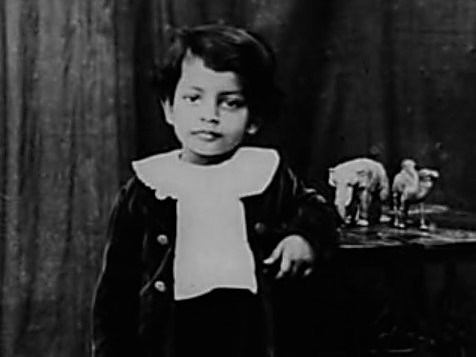
Akira Kurosawa, one of the greatest directors had remarked about the creative genius Satyajit Ray: “Never having seen a Satyajit Ray film is like never having seen the sun or the moon.” Satyajit Ray consciously made films of different genres throughout his life and he never stopped experimenting. His films covered a wide spectrum with themes of village life, urban life, corporate life, the Naxalite years, famine, musical fantasy, detective stories, conflicts within a family, life of a taxi driver, the insecurities of a matinee idol, superstitions in religion and society, the Swadeshi Movement in freedom struggle, princely life in colonial India, pitfalls of Modern Civilization, satire, adventures, documentary films and entertaining films for children.
He also tried various technical experiments in all aspects of film-making like lighting, colour, music, editing, use of camera angles and tricks, even advertising with imaginative cinema posters.
Apart from being a film-director, Ray performed many different roles in film-making. He wrote all of his screen-plays with detailed sketches of shot sequences – a veritable lesson for budding film-makers.
The maestro composed music in all his films fusing Indian classical, Western classical and folk music from many parts of India, culminating in some distinctive Ray tunes; in a few early films he used renowned classical musicians like Ravi Shankar, Ali Akbar and Vilayat Khan as music directors.
The year 2021 marks the birth centenary of renowned auteur, polymath, litterateur, composer, illustrator and designer, Satyajit Ray. There isn’t much unanalyzed about Ray’s film-making. His eye for perfection, poignancy, profound understanding of both the content and technique, coupled with his background scores, sets and costumes, are all a matter of awe and inspiration worldwide. It is a well-known fact that Ray was said to have realized his passion for filmmaking after his chance meeting with French director, Jean Renoir, and on watching Vittorio De Sica’s neorealist film, ‘The Bicycle Thief’ (Italian: Ladri di biciclette, 1948). That he would one day be regarded so highly by some of the best directors of all times, Akira Kurosawa among them, was evidence enough, of how accomplished this self-taught man had been at his craft!
Ray’s mutual adulation for Akira Kurosawa, Ingmar Bergman, Martin Scorsese, Francis Ford Coppola, Richard Attenborough, Michaelangelo Antonioni, Roman Polanski, Elia Kazan, Marlon Brando, John Hurt, among others, has often been reproduced on media through some of the most treasured stills, a bunch of interviews, and very memorable quotes they shared.
Elia Kazan rightly said about Ray, “If he were in Hollywood, he would have proved a tough challenge for all of us.”
The all-rounder that he was, Ray composed the background scores for most of his films himself, he is said to have done primarily on his piano. Ustad Vilayat Khan who composed an excellent background track for Jalsaghar (1958) and Ustad Ali Akbar Khan whose unforgettable score for Devi (1960) took the film to an entirely different level, were both said to have been unhappy with Ray, for being too interfering and disregarding of their independence. Ray was however said to have found the perfect musical partner in sitar maestro, Pandit Ravi Shankar, who composed for ‘Pather Panchali’, ‘Aparajito’, ‘Apur Sansar’ and ‘Paras Pathar’. The soulful scores speak volumes about their conducive and mutually satisfying collaboration. Teen Kanya (1961), an adaptation of three of Tagore’s stories, was however, the official birth of Ray, the music composer, and he never looked back after that.
Henrik Ibsen’s ‘The Enemy of the People’ was probably the only non-Indian work to be adapted to a Ray film. He also adapted two of Munshi Premchand’s stories, Shatranj ke Khiladi (1977) and Sadgati (1981).
Other than that, Ray had taken up famous works by not only Tagore, but by many Bengali authors like his own grandfather, Upendrakishore Ray Choudhury, Prabhat Kumar Mukhopadhyay, Rajshekhar Basu, among others.
Satyajit Ray’s multi-dimensional talents have remained largely overlooked in favor of his film-making, however, he experimented with calligraphy and design throughout his life, most prominently for the Sandesh magazine. He is said to have developed four typefaces for Ray Roman, Ray Bizarre, Daphnis and Holiday, and many Bengali ones.
He had studied painting at the Kala Bhavan in Shantiniketan, and was mentored by greats such as Nandalal Bose and Benod Bihari Mukherjee. Ray preferred creating his publicity contents, the sketches accompanying his stories, and the covers of his books and was among the pioneering graphic designers of India. Except Sadgati, his 1982 six-reeler based on a Munshi Premchand story and Shatranj Ke Khiladi also a Premchand story, all his films are in Bengali – not only in the language the characters speak but also in its idioms and nuances.
Yet he has communicated with perfect ease to an audience outside his native milieu. In fact the Ray aficionado has no linguistic identity or nationality; his only generic trait is a certain degree of enlightened receptiveness. Once cued in, the sounds and images transcend all geographic frontiers.
Journeying through Rayland is like riding on a Wellsian time shuttle. It is a voyage through dark tunnels and sun-washed fields of human emotion, done at a speed at which centuries and attitudes blend and blur. Back in a gloomy, rain-soaked Bengal Village, the “Song of the Little Road” (English title for Pather Panchali) echoes to the rhythm of birth, death and nature.
In Jalsaghar, tearing its way through surrealist marsh and fog, the feudal nobility rides to its grand death. In Charulata, amid brocaded walls, ornate banisters, and incessant talk of Bentham and Mill, a young and lonely nineteenth century housewife gives her heart away. In Shatranj, two men squabble over trivia and keep on shuffling their chess pieces as empires change hands.
The journey continues. With Goopy Gayen Bagha Bayen it veers into the land of fantasia where a village yokel with musical pretensions, and his companion, a percussionist of identical calibre, are suddenly blessed by a gaggle of ghosts.
They don’t have to look back after that. Then the world changes; with Pratidwandi (The Adversary) in 1970, it becomes harsher, gloomier and taut. At its end, an uncommitted youth finally comes to terms with reality at a whistle-stop town where he listens to a strange bird call that takes him back to his childhood.
Varied Scenarios: The journey loops round the world of showbiz – its glamour and its pain – in Nayak. It returns to the brutality of city life, its cut-throat competition and the gambles that are played on perpetually high stakes, as in Jana Aranya. It immediately hits a bright spot, guiding viewers along the maze of Varanasi streets with a witty and plucky private eye to keep company, in the delightful whodunit. Jai Baba Felunath.
The voyage enters its bumpiest trail in its more recent phase. Off go the soft soil and the banana groves of Bengal, together with the delicate crises and their subtle resolution. The landscape of Sadgati is harsh and bereft of all emotion. As Mohan Agashe who plays the village priest, tugs away the body of Dukhi Chamar (played by Om Puri). The bonded Harijan labourer who died working for him, benedictions from the Gita come out of his mouth with a scalding irony.
With Piku, his 1982 two-reel film made for the French television, the world turns only a shade grimmer, and the liberal humanism of his earlier films seems like a thing from the past. Piku is a six-year-old in a bourgeois home where the father is cynically aloof, the mother is exhausted and self-pitying even in her adultery, and the grandfather, who loves him. has a fatal stroke. These dead-end relationships are seen through the eyes of the boy, who goes on drawing flowers in his sketch-book almost as a gesture of protest.
And now, with Ghare Baire (The Home and the World). Ray’s art turns a full circle, veering back to the milieu with which he has an abiding emotional link-Bengal at the turn of the century. His most perfect film so far. Charulata, based on a Tagore story, explored the place of a woman in a changing society.
Ghare Baire, also from a Tagore novel picks up the thread of his essay on womanhood. Here, Bimala. the housewife (played by newcomer Swatilekha Chatterjee), is torn between her cool, rational and politically moderate husband. Nikhilesh (Victor Bannerjee) and her lover Sandip (Soumitra Chatterjee) a fire-eating revolutionary whose irresponsible terroristic acts lead to communal conflagration in a peaceful village. Nikhilesh dies in the arson, but after realising that his wife has seen through the sham. It is Tagore’s consummate (and unpopular) interpretation of terrorism. Surprisingly. Ray has accepted the interpretation lock, stock and barrel.
If Charulata was an indictment of the excesses of liberalism, Ghare Baireis surely turning out to be an equally bitter rejection of the cult of violence, terrorism and the closed society. And in both, the political theses are encased in two almost musically-structured love stories. Says Chatterjee, whose assignment in Ghare Baire is his 11th in a Ray film: “Both the indictments are true, and eminently applicable to the Bengal society. Tagore was against excess of any kind. And so is Ray. Both are classicists in that sense.”
What makes Ray as a person so compelling? Ray is quite a few ‘bests’ rolled into one: the country’s best film maker; the best book designer in Bengal; the best-known illustrator and graphic artist; and, as Adi Gazdar, the Calcutta pianist, said: “Ray is one of the best connoisseurs of Western classical music in the country.”
Ray had established himself as a graphic artist and designer long before his film career began. In fact the idea of filming Pather Panchali came to him while illustrating the novel’s abridged edition. In the early ’50s, his free-lance work for the Signet Press spawned a new range of concepts and designs.
Despite his busy film schedules, Ray still finds time to practise calligraphy and as a rule illustrates his children’s books. A few years ago he designed a new type-face, the Ray-Roman, which is a subtle variation on the Roman family of types. The type-face is a natural extension of his skill as a book designer, and has entered the printer’s manual.
Ray’s moorings in design and graphic arts are absolutely professional. For seven years before the release of Pather Panchali, he had been slogging away at the art department of D.J. Keymer, a British advertising agency and the forerunner of today’s Clarion Advertising Service. Between drawing up “campaigns for tea and biscuits”, and designing book covers for Signet Press, his two passions were films and music.
ও পারেতে বৃষ্টি এলো,
ঝাপসা গাছপালা।
এ পারেতে মেঘের উপর,
১০০ মাণিক জ্বালা।।
