
‘If music be the food of love, play on.’
Given that recent years have seen the revival of the character and the author, it should not be surprising to see the notion of the author as didactic comes back as well. William Shakespeare advocates a model of honour and love through his plays. In Romeo and Juliet, Shakespeare described an ideal yet short-lived form of passionate love by embedding the story of the young lovers in contrasting scenarios of relations between the sexes for the purpose of debating the nature of love. By applying different linguistic and dramatic plays, Shakespeare engages the audience and reader in reflecting on the phenomenology of love, reaching many different types of readers or audiences. The play’s language and imagery- some of which has been deeply embedded in our understanding of romantic love – will be analyzed to show in which way Romeo and Juliet’s love is described as being extremely desirable and as having universal appeal yet as being bound by limitations.
What strikes the modern reader of Romeo and Juliet right from the beginning is that Shakespeare displays the plot and gives it all away: he tells us what is to come and reminds us of it throughout the play. From the beginning we are made aware that we are dealing with a tragic story: ‘the fearful passage of their death-marked love’. The writer invites us to analyze the case of these lovers with him. When the play ends, our glimpse of this great love ends with it. The finishing lines are not just a testament to the two lovers’ sad demise but also the farewell to an ideal which the author wants us to keep thinking about, but which can never be had of any duration. Prince: A glooming peace this morning with it brings the sun for sorrow will not show his head. Go hence, to have more talk of these sad things; some shall be pardoned and some punished, for never was a story.
Even though this declaration of intent is an established ploy for tragedies in the Greek tradition and thus can be seen as a conventional characteristic. In Romeo and Juliet, it has the effect of underlining the fact that the course of tragedy cannot be altered. It also makes the reader think about the nature of the love story. We think about the how and why must it fail? Romeo and Juliet’s love is described as an ideal of such perfection that it cannot be sustained in the earthly realm. Shakespeare wants us to remember this and it is done by displaying the contrast between the purity and freshness of Romeo and Juliet’s love with frequent displays of other types of interaction between man and woman.
All these other manifestations of love and sex are used to highlight the exceptional bond between Romeo and Juliet. They are also grounded in real life. What the Elizabethan audience witnessed in their everyday life all either present or suggested in the play. They are what we have to deal with in real life; but by recognizing this, Shakespeare gets us on board to view the alternative: the ideal love between Romeo and Juliet.
Love in Shakespeare is a recurrent theme. The treatment of love in Shakespeare’s plays and sonnets is remarkable for the time: the Bard mixes ‘courtly love’, ‘unrequited love’, ‘compassionate love’ and ‘sexual love’ with skill and heart. Shakespeare does not revert to the two – dimensional representations of love typical of the time but rather explores love as a non-perfect part of the human condition. Love in Shakespeare is a force of nature, earthy and sometimes uneasy. Love and trust are fine; but a story becomes gripping when betrayal is introduced. Some of the greatest antagonist of all time have been traitors, double crossers or simply rascal who betrayed the people who trusted (and sometimes loved) them. In Greek literature, there is the betrayal at every turn. Aeneas betrays Dido, Clytemnestra betrays Agamemnon and Ephialtes betrayed the Spartan by helping the Persians at the Battle of Thermopylae.
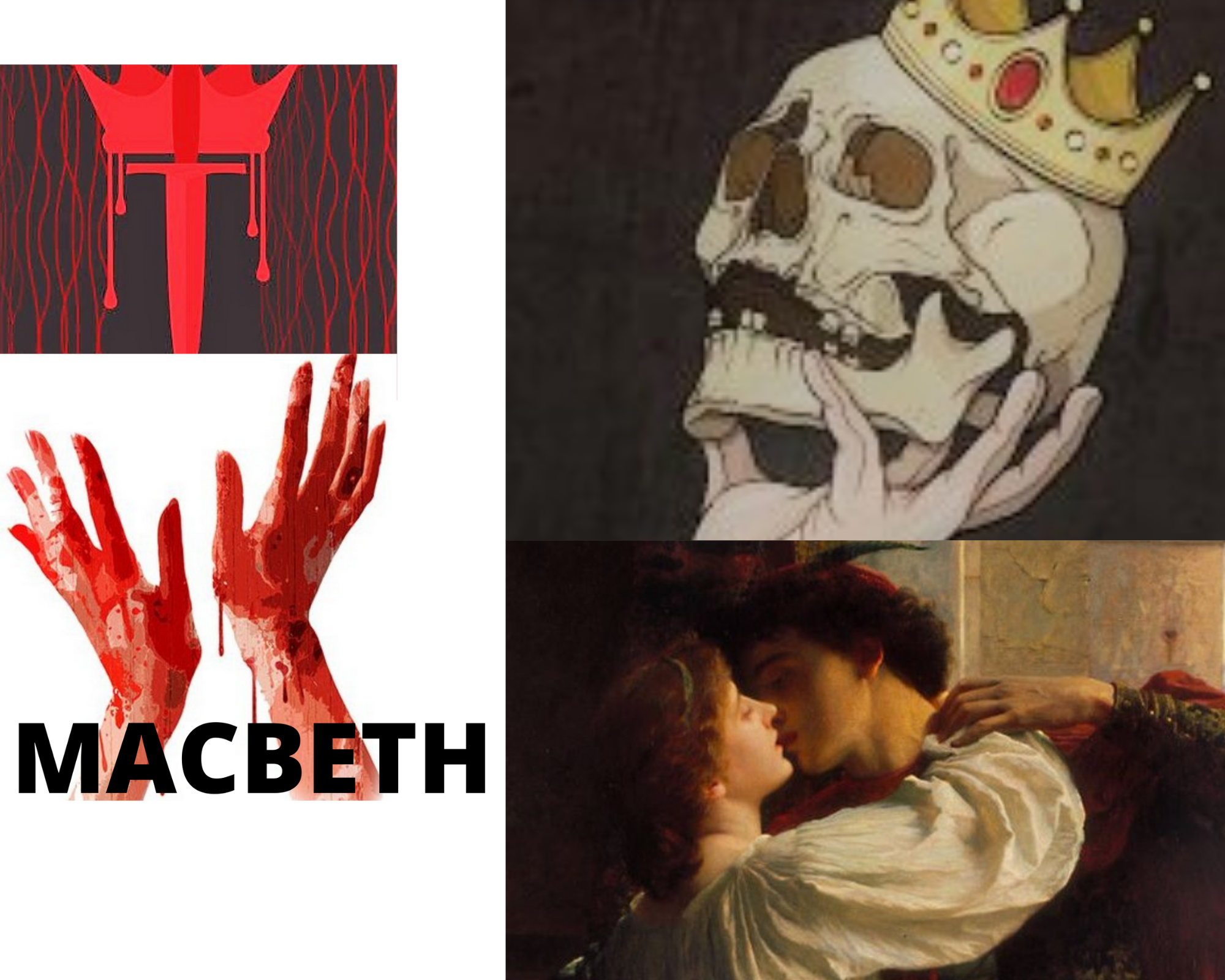
The tragic contradiction between love and society is most forcibly portrayed in literature in Leo Tolstoy’s Anna Karenina, Gustave Flaubert’s Madame Bovary and William Shakespeare’s Hamlet, Romeo and Juliet and Macbeth.
Calculating deceit of Othello perhaps the greatest illustration of evil ever written. An instance can be seen in Shakespeare’s Macbeth when Lady Macbeth happily jumps, on the bandwagon to kill the king and take the throne she has no qualms about the betrayed because it will lead to power. Duncan is shocked by his misplaces trust in the Throne of Cawdor. He is hurt that someone close to him cannot turn on him like that, and this sets the stage for the disappointment and tragedy of Macbeth’s betrayal.
In Shakespeare’s Measure for Measure, Isabella needs love, and she may reject marriage with the Duke because he seeks to beget on heir with her for her virtues, and she is not happy with the limited kind of love that implies. For as long as mankind have existed so too have the troubles of love. Hamlet is seen to go through these same trials as his love for Ophelia is put to test. Ophelia is destroyed by her loss of Hamlet and essentially the future throne, driven by madness to suicide. Hamlet must now deal with another loss, that of his love.
In A Midsummer Night’s Dream, there are a lot of different forms of love. The plot seems irrational because everyone falls in love with the wrong people because of the special love potion in Act 3 Scene 2. Love triangles start to form and everyone is running in the forest looking for ‘their loves’.
Hamlet is figuratively a revenge tragedy. For much of the play, Hamlet is in a state of agitation. It is when he is talking to either of the two female characters that he is most agitated – so much so that he is driven to violence against them. He cares about both but does not trust either. He feels his mother, Gertrude, has let him down by her ‘o’er hasty marriage’ to Claudius. To him, it means that she did not really love his father. In the case of Ophelia, he is suspicious that she is part of the palace plot against him. Both women die in this play Ophelia is driven mad by the treatment she receives from the three men- Claudius, Polonius and Hamlet – and takes her own life.
Shakespeare reveals in Twelfth Night a misdirected love as one of the main themes. The two characters are Orsino and Olivia. Orsino is extremely in love with Olivia but Olivia has no interest in Orsino. He brings her flowers and writes her love songs but she still has no attraction for him. Over time, it starts to become very clear that Orsino is not in love with Olivia as much as being obsessed with her. This shows that love at first can be unfair how one can love another but that person does not have to love you back.
In Shakespeare’s Antony and Cleopatra there is an amorous love connection between the two characters (Antony and Cleopatra). In Act 1 Scene 1 Cleopatra and Antony were together and Cleopatra questions Antony’s love for her. Antony responds by telling her that it exceeds the boundaries of Heaven and Earth. While telling her this he uses a heavy load of exaggerated language and tries to show her how much he really loves her through his ‘romantic speech’; Shakespeare here shows that there can be a little bit of sweetness and kindness to love and it always does not have to be so tragic.
The intensity of the forbidden love between Romeo and Juliet is pitched against the hate-ridden society in which they live. In the balcony scene, Juliet tells Romeo that if her kinsmen find him in the orchard they will murder him. It is that hatred that is going to destroy them. The hatred generated by the ancient feud is just as intense, as we see from the emotional behaviour of Tybalt, as the intensity of the love between Romeo and Juliet. Romeo and Juliet have lifted the surrounding society out of its hinges: the intentions of the father, the mother, Paris, the nurse and to an extent the friar have all been made arbitrary. Romeo and Juliet have shown them all, but in the end it is them who become show-cases: Characters cast in stone.
Hamlet, Othello, Macbeth and Antony and Cleopatra is a profitable exercise. These plays lend themselves to the existence of love in them and its allied forms, lust, jealousy and idolatry is indisputable. Love is disastrous for those who labour in its bonds.
Love in the mature tragedies is illusory. The emotions which characters identify as love cannot stand the test of love, as conceived in terms of realism, awareness and objectivity. Lovers are drawn into a fragile unity fraught with delusion which, when dispelled and thwarted, dashes deception against inexorable reality. It is not love but the illusion of love which drives Othello to kill his wife. Shakespeare’s lovers partake variously of idolatry, ego and infatuation, in the belief that theirs is the pure emotion. Only the dregs of illusion excite Antony to the knowledge of Cleopatra’s nature, and even then – as witnessed in the episode with Thidias, Antony’s fears are soon quieted by his persisting delusion of happiness.
Illusion is a faculty perception of reality and unwillingness; in the nature tragedies, other distortions – meditated acts of hypocrisy and manipulation – are apparent. Lover consciously manipulates beloved and cares not; or knows not, that such action is inimical to the integrity of a relationship. Hamlet’s treatment of Ophelia in the ‘nunnery scene’ is no more opprobrious than the acts of Ophelia herself. Lady Macbeth’s ambition was to see her husband as the king threatened then destroyed Macbeth’s inner balance between good and his desire to please his wife. Her treatment of Macbeth augurs the decay of their marriage. Duplicity takes its toll in the plays.
Shakespeare, writes C.H.Herford, evinces a ‘bias for normality’ in treating the subject of love in most of his plays. It should be noted that Herford was consciously excluding the mature tragedies from his observation. Normal love in Shakespeare ‘is a passion, kindling heart, brain and senses alike in natural and happy proportions; ardent but not sensual, tender but not sentimental, pure but not ascetic, moral but not cynical.’ Tested in this light, the loves of the mature tragedies deviate from the established norm, whether its origin is in Shakespeare, Erich Fromm or elsewhere.